ERP for distributors and importers
Buy abroad, receive in parts, sell from stock. Celerp adds the freight and duty on the supplier's bill to the cost of each item, so you see what your stock really cost. Free, on your own computer.
Quick answers
Is Celerp free?
Yes. The desktop app is free for business use: no account needed, no per-user fee and no limits on companies, users, items or records. The core is source-available and the modules are MIT-licensed.
Does it work offline, and can I self-host it?
Yes. Celerp runs on your own computer and works offline: the core product needs no internet connection. You can also self-host it on an office or cloud server, so the database stays on hardware you control.
What does Celerp cover?
Inventory, invoicing, purchasing, full accounting, CRM, manufacturing with bills of materials, and reporting, all sharing one set of data.
Which industries is it built for?
It ships with presets for retail, jewelry, gemstones, watches, coins, fashion, cosmetics, food and beverage, wine and spirits, agriculture, electronics, auto parts, hardware, furniture, books and media, art and consulting.
What does Celerp Connect cost?
$29 a month or $290 a year for your whole setup, never per user, with the first 14 days free before billing starts. Connect adds store and accounting sync, remote access, 100 included AI queries and encrypted cloud backups. The desktop app works fully without it.
Updated for version 2.9.0 on .

Where importing goes wrong
The real cost shows up late
Freight and duty sit on the bill while the stock is costed at the supplier's price. Margins look better than they are until someone does the sums at month end.
Shipments arrive in parts
Half the order comes this week and the rest next month. The order should show what came and what is still to come.
Goods with a date on them
Food, drink and cosmetics need the nearest expiry out first, and someone has to notice when a lot is about to expire.
From purchase order to stock
Raise a purchase order and receive what arrives. The order shows as partially received until the rest comes in.
Freight, insurance, import duty and import VAT you cannot reclaim, when they are on the supplier's bill, are spread over the bill's stock lines by value. Import VAT you can reclaim stays out of the cost.
The bill keeps its exchange rate, and the stock and its landed cost are booked in your currency at that rate.
Choose per product whether the oldest lot or the nearest expiry date goes out first. Celerp tells you once when a lot comes within 30 days of its expiry date.
Landed cost on one bill
A bill for 10 bottles of olive oil at 20.00 and 30 tins of tomatoes at 10.00 also charges 50.00 of sea freight and 25.00 of import duty. Celerp spreads the 75.00 by the value of each line: the oil takes 30.00 and lands at 23.00 a bottle, the tomatoes take 45.00 and land at 11.50 a tin.
Until the goods arrive, the freight and duty wait on their own clearing accounts. When you receive the stock, its share moves into inventory. When you sell it, cost of goods sold includes it.
Celerp spreads the charges that are on the supplier's own bill. A separate invoice from a freight forwarder or a customs broker is not spread onto the goods.
Shipping papers from the same records
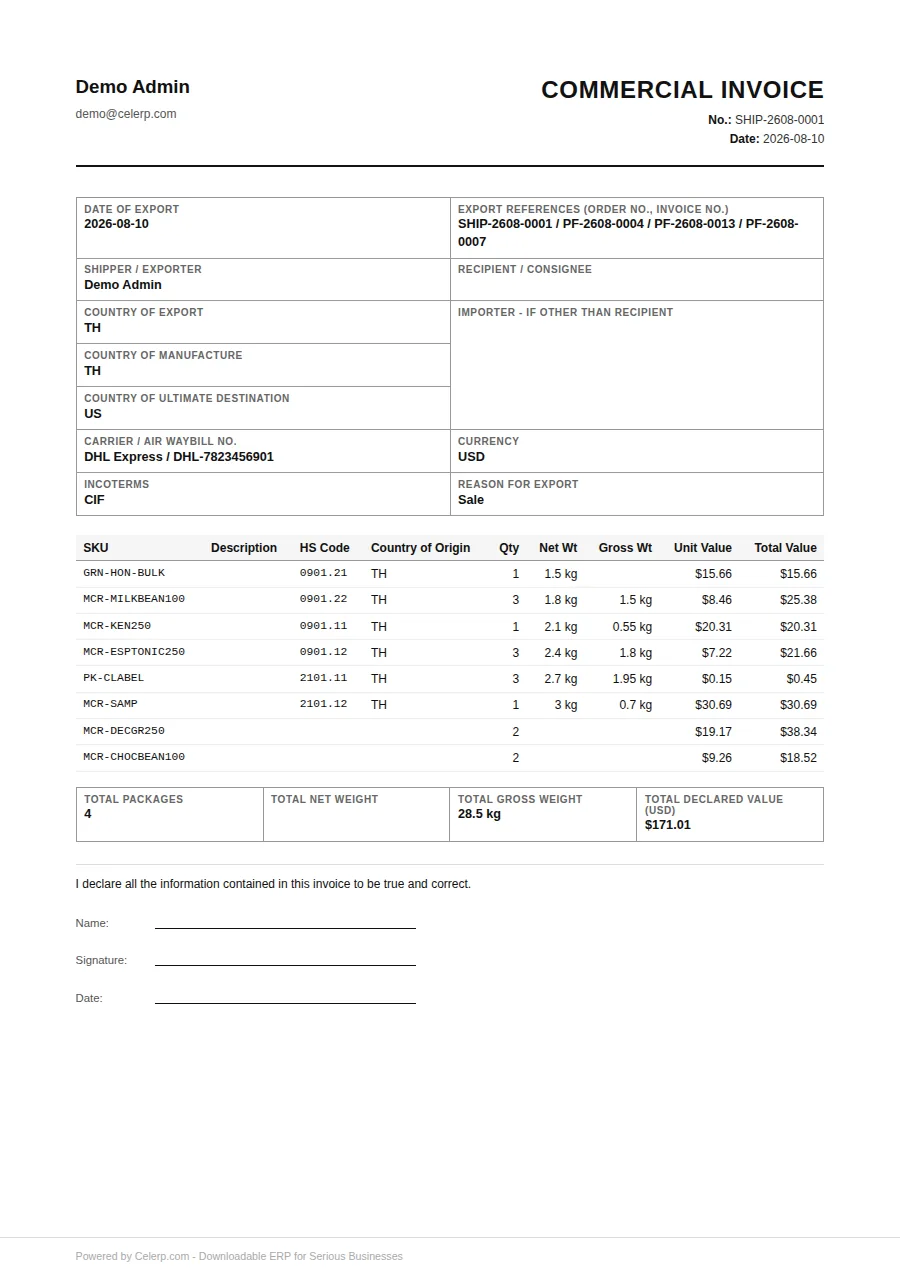
When you sell across a border, a shipping document prints as a delivery note or a commercial invoice, with HS codes, country of origin, Incoterms and the reason for export.
Selling to your customers
Keep wholesale and retail price lists, send quotes and invoices, and send each customer a statement of what they owe. Your stock, sales and books stay in one place. Celerp for retail
Questions from importers and distributors
Does Celerp file customs declarations?
No. Celerp prints the commercial invoice your carrier or customs broker asks for, but the declaration itself is filed by them or through your country's customs system.
Does Celerp track containers or shipments at sea?
No. Celerp tracks the purchase order, what you have received and what is still to come, not the ship or the container.
Can a freight forwarder's invoice go into the cost of the goods?
Not today. Celerp spreads the freight, insurance, duty and import VAT you cannot reclaim on the supplier's bill over that bill's stock. A separate forwarder or broker invoice is not spread onto the goods.
How do I set it up?
Choose the business type closest to what you trade, such as food and beverage or hardware, when you create your workspace. Importing works the same for every type.
Start with your next shipment
Download Celerp, import your product list, and enter your next supplier bill with its freight and duty.